
This week at a glance
National Women’s Health Week in the U.S. is landing against a backdrop of new maternal health data from Africa and South Asia, fresh regulatory guidance on pregnancy safety studies, and yet another round of U.S. reproductive‑rights whiplash as the Supreme Court temporarily restores access to abortion pills while states push competing constitutional amendments.
Anaemia, PPH, and maternal deaths in Africa and South Asia
Summary
A new report drawing on the WOMAN‑2 trial (15,000+ women with moderate or severe anaemia giving birth in Nigeria, Tanzania, Zambia, and Pakistan) argues that anaemia is a hidden driver of maternal deaths, potentially responsible for around half of severe postpartum haemorrhage (PPH) cases in sub‑Saharan Africa and South Asia. Severe anaemia increased the risk of maternal death or “near‑miss” seven‑fold and tripled the risk of stillbirth compared with moderate anaemia in the study population. The authors warn that current PPH definitions based on fixed blood‑loss thresholds miss about a quarter of women who die or nearly die, especially those starting childbirth already anaemic.
Why it matters
Sub‑Saharan Africa accounts for about 70% of preventable maternal deaths globally, and maternal mortality progress has stagnated despite earlier gains. If anaemia is a major prognostic factor for death and stillbirth in PPH, then life‑course strategies (nutrition, infection control, heavy‑bleeding management, contraception, and TXA access) could be as important as intrapartum obstetric care in closing the maternal mortality gap.
Read more: thebloodtrials
Funding and policy momentum on maternal health in Africa
Summary
Africa’s maternal mortality ratio remains about 545 maternal deaths per 100,000 live births—far above the global target of fewer than 70 by 2030, and with big sub‑national disparities. The Gates Foundation has committed about 2.5 billion USD to neglected women’s health conditions, with a strong focus on postpartum haemorrhage; Kenyan partners are using high‑visibility events like the “End PPH Run” across multiple counties to link this global funding to local system fixes (uterotonics, blood, midwives, referral networks).
Read more: scienceforafrica
Why it matters
Despite a roughly 40% decline in maternal mortality since 2000, sub‑Saharan Africa still saw an estimated 182,000 maternal deaths in 2023, showing that progress is real but too slow and too uneven. How this 2.5‑billion‑dollar commitment is translated into procurement, training, and community‑level interventions will shape whether Africa hits or misses SDG.
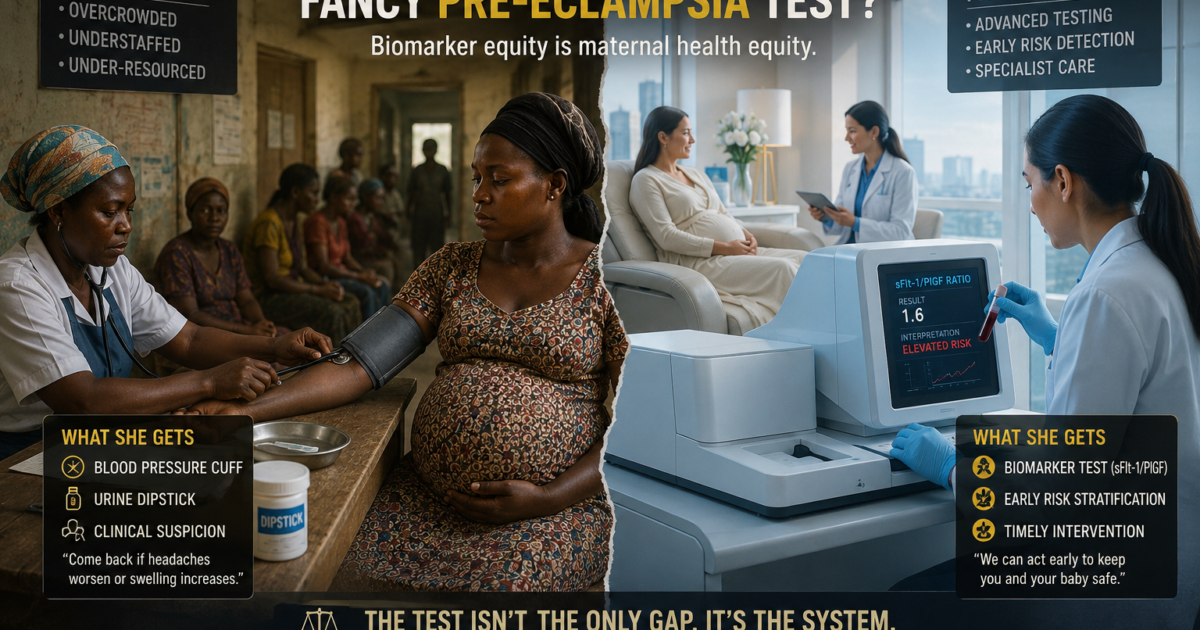
Biomarkers and pre‑eclampsia in low‑resource settings
Summary
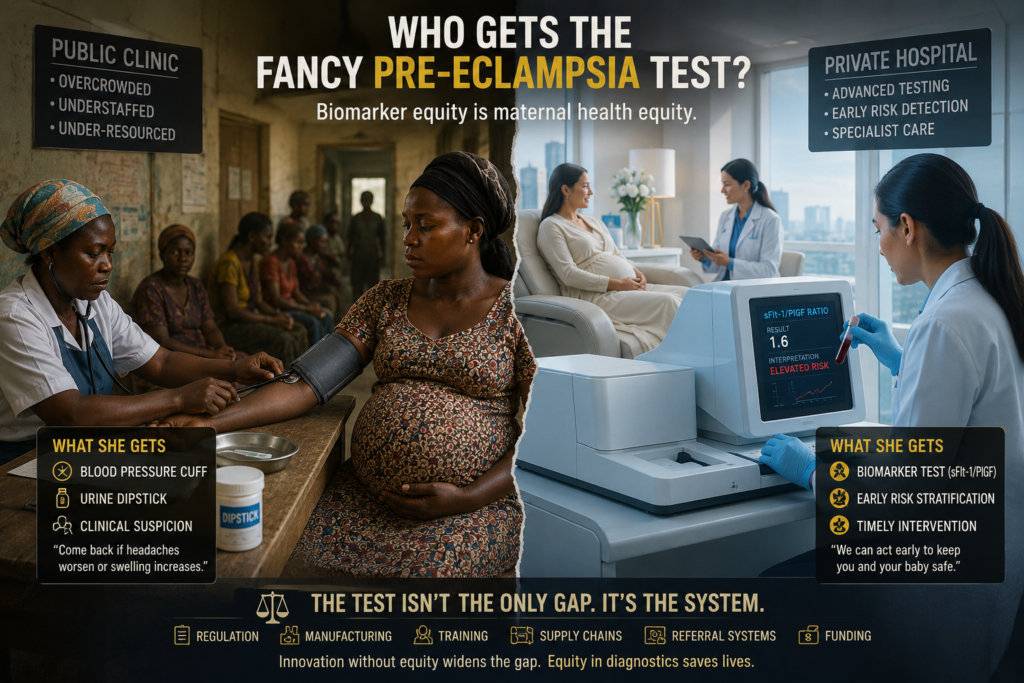
The Lancet Obstetrics, Gynaecology, & Women’s Health highlights the “strengthening global pre‑eclampsia diagnosis” agenda, focusing on the potential role of biomarker‑based tests to improve early detection in low‑ and middle‑income countries. The journal frames biomarker access as a way to move beyond crude clinical criteria, especially where blood pressure and proteinuria monitoring are unreliable or late.
Why it matters
Pre‑eclampsia is a leading cause of maternal and perinatal mortality, and diagnostic delays are common in settings that already shoulder most maternal deaths. If biomarker‑based tests are designed and priced for LMIC clinics instead of only for high‑income hospitals, they could shift who gets timely referrals and magnesium sulfate, and whose pregnancies are safely prolonged or ended.
Read more: https://www.sciencedirect.com/science/article/abs/pii/S3050503826000579
FDA final guidance on pregnancy safety studies
Summary
On 7 May 2026, the U.S. FDA released final guidance titled Postapproval Pregnancy Safety Studies, aimed at sponsors running post‑marketing studies of drugs and biologics in pregnant women. The document outlines recommended designs and outcomes for tracking pregnancy exposures and safety, upgrading earlier draft guidance from 2019.fda
Why it matters
Women,especially pregnant women, have historically been excluded from clinical trials, leaving huge evidence gaps on drug safety in pregnancy. Binding expectations for postapproval pregnancy safety studies can push industry to generate better real‑world data on maternal and fetal outcomes, but they also risk being under‑resourced unless regulators enforce them.
Read more:
https://reproductiverights.org/news/u-s-repro-watch-5-5-26/
Digital and life‑course mental health in pregnancy: emerging signals
Summary
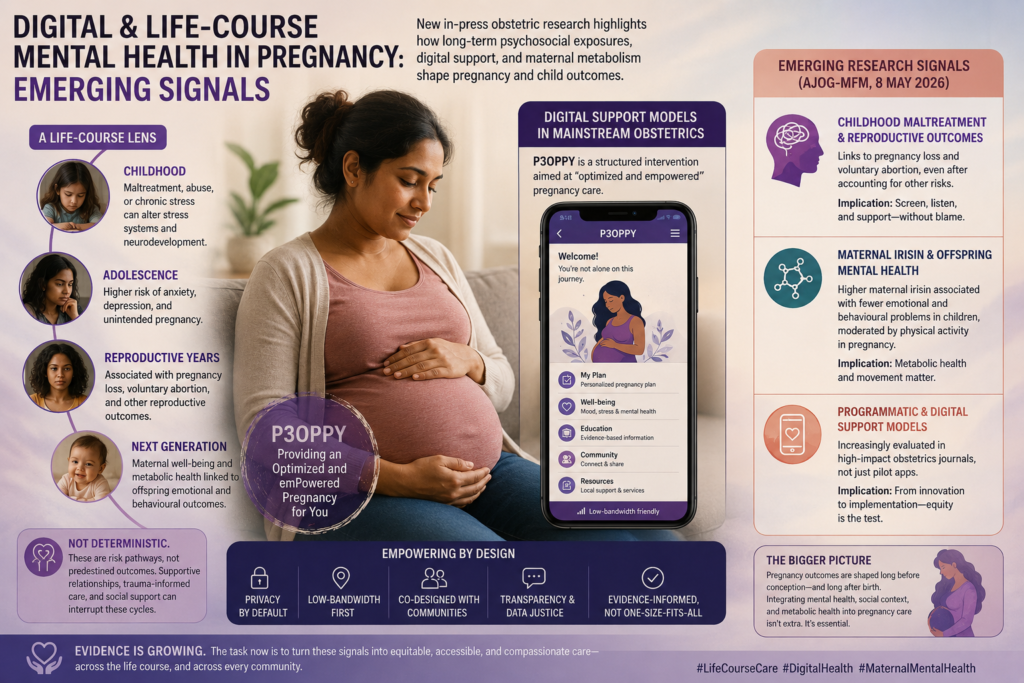
Several in‑press obstetric papers released online on 8 May 2026 focus on life‑course and psychosocial determinants of reproductive outcomes. An American Journal of Obstetrics & Gynecology MFM pre‑proof describes Providing an Optimized and emPowered Pregnancy for You (P3OPPY), a structured intervention aimed at “optimized and empowered” pregnancy care, signalling continued interest in digital or programmatic pregnancy support models. Other AJOG‑MFM pre‑proofs examine links between childhood maltreatment and pregnancy‑related reproductive outcomes (including pregnancy loss and voluntary abortion) and associations between maternal irisin (a metabolic biomarker) and offspring emotional and behavioural problems, moderated by physical activity in pregnancy.sciencedirect+3
Why it matters
These papers extend a growing evidence base that pregnancy outcomes are shaped by long‑running psychosocial exposures and by maternal metabolic health, not just antenatal visits in the third trimester. They also show how “empowerment” programs and digital interventions are being formally evaluated in mainstream obstetrics journals, not only in startup pitch decks.
Read more:
https://www.sciencedirect.com/science/article/abs/pii/S258993332600087X
Integrative and complementary approaches: acupuncture still promising but uneven
Summary
Recent overviews continue to position acupuncture as a low‑risk but variably evidenced tool across menstrual pain, PMS, some perimenopausal symptoms, and pregnancy‑related conditions such as back pain and antenatal depression. Systematic reviews and meta‑analyses suggest meaningful pain relief for dysmenorrhoea and some mood and sleep outcomes, but more mixed or negative findings for adjunct use in IVF and for inducing labour. Clinician‑facing summaries emphasise that, when delivered by trained practitioners, acupuncture’s safety profile is generally favourable and many women report improved wellbeing and cycle regularity, though high‑quality trials remain uneven.
Why it matters
Women worldwide are already using acupuncture and other complementary therapies for period pain, fertility, menopause, and pregnancy‑related discomfort, often when conventional care feels dismissive or incomplete. Getting the nuance right—where evidence is strong, where it is weak, and how to integrate acupuncture safely alongside standard care—is key if femhealth.science wants to speak credibly to both clinicians and patients exploring integrative options.
Read more:
https://www.westsidewomenshealth.com/blog/acupuncture-and-womens-health
National Women’s Health Week as a content hook
Summary
National Women’s Health Week 2026 runs 10–16 May, led by the U.S. Office on Women’s Health to encourage women to prioritise physical, mental, and emotional wellbeing across the life course. The campaign is broadcovering preventive care, chronic disease, mental health, and lifestyle and coincides with a dense calendar of women’s health conferences and policy activity in 2026.
Read more: https://womenshealth.gov/nwhw