I have a habit of connecting things that probably shouldn’t be connected. Or at least things that, at first, don’t look connected. Depending on the day, I call it pattern recognition or delusions of grandeur.
I have always thought like this. One thought takes me somewhere else, then somewhere completely different, and eventually I find myself looking back at the beginning thinking, wait, there is something here. Maybe it’s ADHD. Maybe it’s because I grew up between cultures and learned quite early that the same thing can have completely different explanations depending on who is looking at it. Maybe this is just how my brain works. Go figure…
Today I was thinking about yin and yang, men and women, balance and dominance. All of this while dropping my toddler at crèche. That took me to chromosomes, then violence, then the scale of natural forces. I started thinking about how a tsunami is just water, something necessary for life, behaving at a scale where it becomes destructive. Then I thought about an ant encountering a human. Somehow I ended up at Indigenous knowledge and women’s health, before reminding myself to stop drinking so much coffee and pick up my Ritalin prescription on the way home.
Some of my connections were interesting. Some were biologically wrong, and I kind of knew that, but I like imagining things and seeing where they go. That was actually the interesting part. Being wrong about the explanation doesn’t necessarily mean you were wrong to notice something. We tend to collapse those two things.
If someone says, “Every month, around this particular time, my medication feels different”, there are several possibilities. She might be mistaken. The effect might be real but caused by something completely different. It might happen only to a subgroup of women. Or she might have noticed a biological relationship that medicine hasn’t properly investigated yet. Not knowing which explanation is correct is exactly where the question starts.
For a long time, women’s bodies gave medicine a particularly difficult version of this problem because women weren’t simply understudied. At different points they were deliberately excluded from research. In 1977, FDA guidance recommended excluding women of childbearing potential from early phases of drug trials. That guidance wasn’t reversed until 1993.
There is another layer of irony here. This was guidance produced by one regulatory body in one WEIRD country: Western, Educated, Industrialised, Rich and Democratic. Yet the US has such an outsized influence on pharmaceutical research and medicine that decisions made there can shape what eventually becomes medical knowledge far beyond its borders. So we weren’t only building knowledge about humans disproportionately from men. A significant amount of what became accepted as knowledge about humans came from a remarkably narrow slice of humanity.
Think about what that does to the idea of “normal”. If you study one population much more than another, you don’t just know less about the missing population. The population you studied becomes your reference point. Then someone comes along whose experience doesn’t fit what you expect and she looks like the anomaly. But sometimes I wonder if we should be looking harder at the model.
There are examples everywhere once you start looking. Endometriosis can still take years to diagnose. ADHD in women was historically easier to miss partly because the recognised presentation was heavily shaped by research and clinical observations involving boys. Now researchers are investigating something women with ADHD have been discussing themselves for years: whether symptoms can change across the menstrual cycle and other hormonal transitions, and what that might mean for treatment and medication.
The evidence isn’t complete, and that matters. A recent systematic review looking specifically at sex hormones and ADHD in females found only 11 eligible studies. Eleven. That’s nowhere near enough to say that every experience women have been reporting is biologically explained by hormones. But 11 studies is also a reminder of how little we actually know. “We don’t have enough evidence” and “this doesn’t happen” are not the same conclusion.
This is where I think we misunderstand anecdotes. An anecdote isn’t evidence of causation, obviously. But it can be the beginning of a research question. If one woman tells you something happens to her body every month, you have an observation. If thousands of women independently describe something similar, you still don’t have an answer, but you certainly have something worth investigating.
And questions matter because science doesn’t investigate everything simultaneously. Someone has to decide what is worth measuring. Even saying that makes the process sound more neutral than it really is. What gets investigated is influenced by the politics of the time, research funding, institutional priorities, available technology and, inevitably, economic value. The same experience can be medically uninteresting in one decade and suddenly become a very interesting research opportunity in another. The women didn’t change. The value assigned to the question did.
I keep coming back to this when I think about women’s health. Who gets believed is one question. Who gets studied is another. Who becomes economically interesting enough to study is another one entirely. That doesn’t make the resulting science bad. It just means the map of what science knows isn’t necessarily a map of everything worth knowing. It is also, partly, a historical record of what humans decided was worth looking at.
This is probably also why I’m uncomfortable when Indigenous or traditional knowledge is automatically dismissed because its explanation doesn’t fit contemporary scientific language. I don’t mean that every traditional claim should be accepted as fact. Of course not. I mean that the observation and the explanation are two different things, and one can be useful even when the other turns out to be wrong.
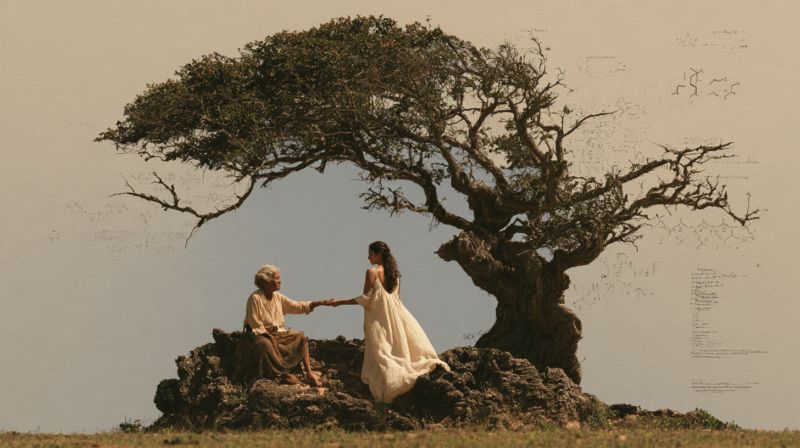
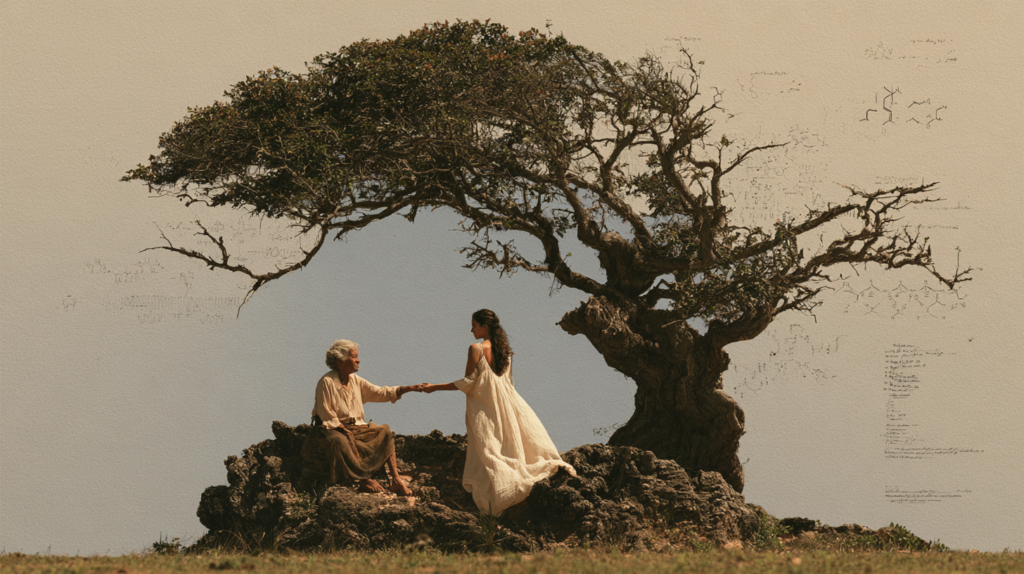
I think about this through something my grandmother used to tell me in Brazil. Her father made her brush her teeth using juá, from the juazeiro tree, and relatives would laugh when she talked about it. It sounded backwards, one of those old practices people eventually learn to be embarrassed about. Except using juá to clean teeth is a documented traditional practice in Brazil, including among Indigenous Tremembé people, and the bark contains saponins, compounds that naturally foam in water. Today you can walk into a shop in Brazil and buy toothpaste containing juá. My great-grandfather didn’t need to know the word “saponin” to notice that the plant was useful for cleaning teeth.
That doesn’t mean every traditional claim about a plant is correct. It means the explanation can be wrong, incomplete or completely absent while the observation is still worth investigating. Sometimes science discovers something genuinely new. Sometimes it gives a name and a mechanism to something people had already noticed. I think women’s observations about their own bodies deserve the same curiosity. There is a huge difference between saying “science has shown this isn’t true” and “science hasn’t established this yet”.
I don’t want to romanticise intuition either. Humans are ridiculously good at finding patterns, including patterns that aren’t there. I did it myself this morning. I came up with a chromosome hypothesis that sounded fascinating in my head and fell apart when I checked the biology. Fine. Throw away the mechanism, keep the question. Maybe that’s the part I don’t want to lose: noticing weird connections, following them further than I probably should, then checking whether they survive contact with evidence.
My grandmother didn’t need to know what a saponin was to clean her teeth with juá, and I don’t need every strange thought I have on the crèche run to become a theory. But when enough people keep saying “something happens here”, I think it’s worth looking. Sometimes there will be nothing there. Sometimes the explanation will be completely different from the one we imagined. And sometimes, years later, someone finally measures it and you think… ah, Grandma knew.