Watching AI Code Editors Compete for Attention (Windsurf vs Claude Code vs OpenCode)
◈
Failure Pattern
The system assumes model orchestration can be abstracted away from the user. In practice, model choice still leaks into outcomes and cost.
◎
What I Noticed
Windsurf felt intuitive for exploration. Cascade made it easier to “see” how things connect, especially as a non-engineer. It took time to realise I could drop images directly into the code flow… once I did, interaction became more visual, almost like designing instead of coding.
Credit consumption was high, especially when using stronger models like Claude Code. Reset helps, but changes behaviour… you hesitate more. Model switching in Windsurf felt abstracted, but not always reliable for complex tasks. I wasn’t always sure the “right brain” was being used.
OpenCode was surprisingly stable. Not as powerful, but more predictable.
Cursor felt heavy on the machine. Good capabilities, but friction at system level made me drop it early.
◉
Design Lens
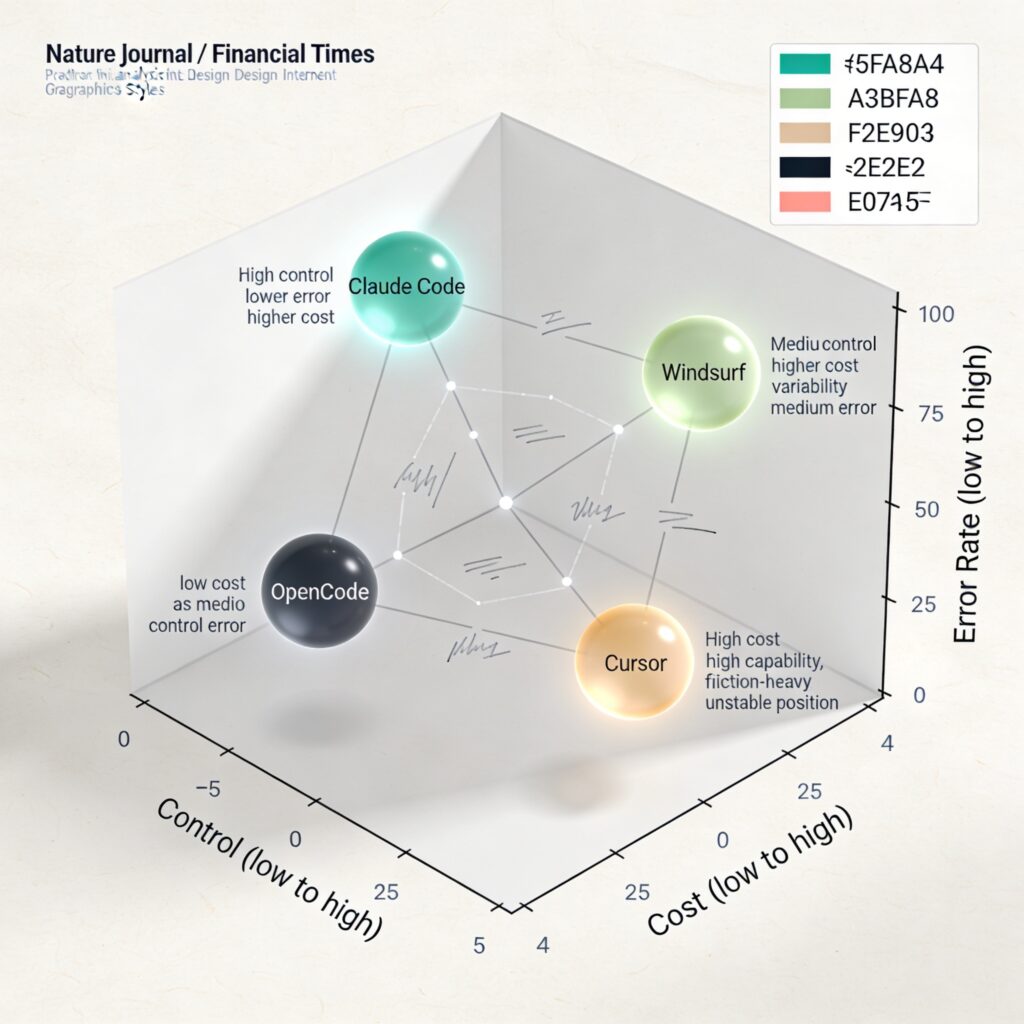
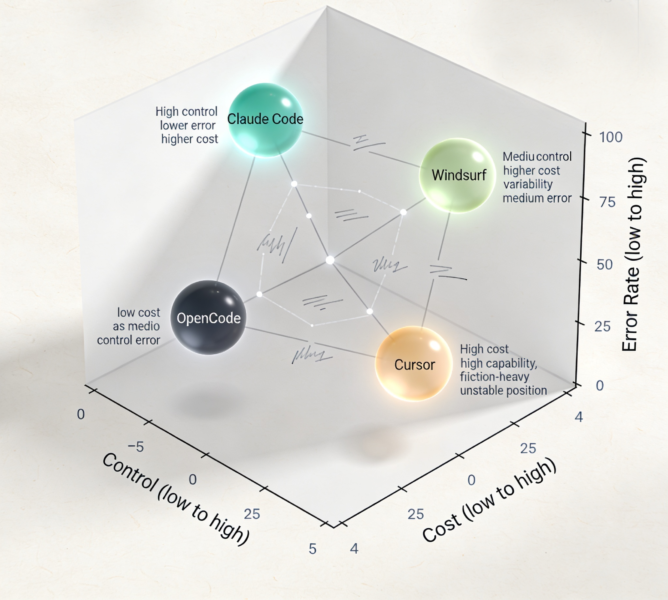
Control vs Abstraction Tradeoff. These tools try to hide complexity (model selection, orchestration), but: less control → more hidden cost + unpredictability more control (Claude Code directly) → better outputs, fewer errors This is classic UX tension… like autopilot vs manual driving.
✏
Sketch
A layered diagram showing three modes: Direct control (Claude Code) Assisted abstraction (Windsurf) Lightweight fallback (OpenCode) With arrows showing cost, error rate, and cognitive load.”