A few days after giving birth, my postpartum doula asked me something that stopped me completely.
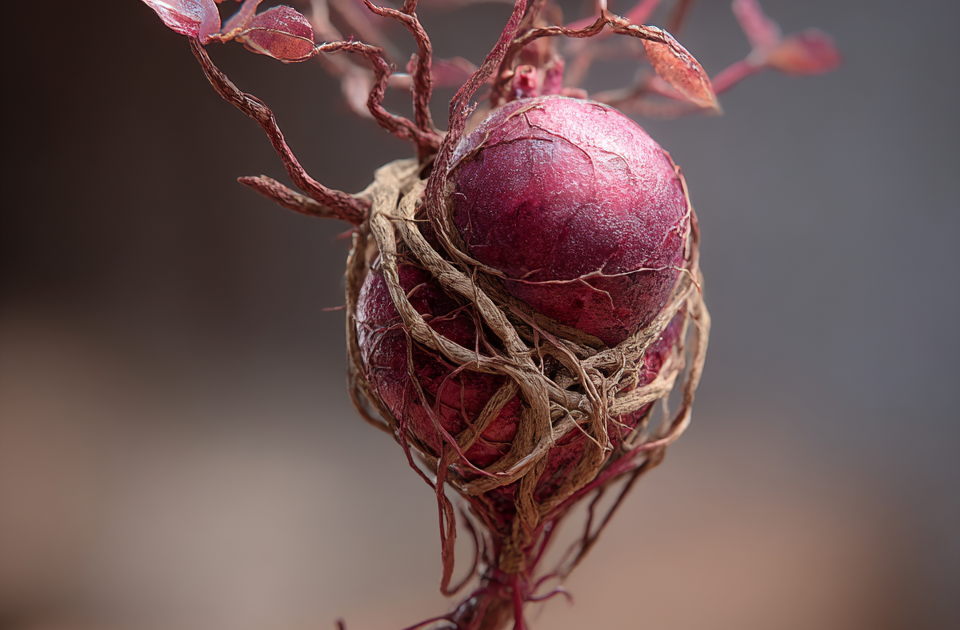
“So… what did you do with your placenta ?”
I just stared at her.
She explained, gently. Some women keep it. Some bury it. Some encapsulate it. Some make prints. Some doulas draw it in detail after the birth, almost like a portrait. Some women just want to hold it once, look at it, acknowledge it existed.
The strange thing is, I had heard fragments of all this before. A documentary clip somewhere. A post that scrolled past. An article half-read years ago. The information had reached me. It just never attached to me. It belonged to a different category of woman… someone more connected to nature, someone who had always wanted children, someone who thought about these things. For most of my life I never imagined having a baby at all, so the information stayed abstract. Filed under other people.
And that’s the part I cannot stop thinking about.
Because I work in tech. I spend my days inside information systems, interfaces, databases, AI pipelines. We live in an era where almost nothing is hidden. You can learn about birth, hormones, neuroscience, ancient ritual, stem cells, fertility, death… in seconds. And yet somehow we remain profoundly disconnected from our own bodies.
Not because we are stupid. Because modern life trains us into abstraction. We consume information without ever integrating it.
Even pregnancy felt like that. Apps told me which fruit the baby resembled that week. Notifications tracked milestones. Forums dissected symptoms with obsessive precision. There was endless information. Almost none of it made me feel connected to what was actually happening inside me.
Then birth happened. And honestly my memory of it is fragmented. Bright lights, instructions, monitoring, preeclampsia, recovery, exhaustion. I barely saw my umbilical cord. Just a glance.
But I remember the thought that arrived in my head immediately :
Wow. That thing is huge.
Thick. Twisted. Almost surreal. A massive biological cable that had silently sustained an entire human life inside me for months.
And something clicked in a way no article or app or pregnancy book had ever managed.
That cord was not symbolic. It was infrastructure.
Real infrastructure. Not digital. Not metaphorical systems thinking, the kind I do at work. Actual life support. A living system carrying oxygen, nutrients, blood, hormones, survival itself. And behind it, the placenta. An organ my body had built temporarily, from scratch, for another human being.
An entire organ. That thought still destabilises me.
I think about this a lot now, professionally too. I design systems for a living. I map flows, dependencies, handoffs. I think about what gets made visible in an interface and what gets hidden behind it. And here was a system I had grown inside my own body… and I had almost no relationship to it. Not because the information was unavailable. Because nothing in how I was taught to be a modern person had prepared me to register my own biology as infrastructure worth attending to.
So the doula’s question wasn’t really about the placenta.
It was about how much of our own experience we move through without ever being taught to see.
How knowledge can sit inside us for years and still not reach us until experience collapses the distance.
How a body can understand something the mind has been circling around abstractly for a decade.
I don’t regret not keeping mine. That’s not the point. The point is the gap… between what I knew and what I actually let in. And how a single question from someone who treated my body as worth knowing did more for me, in that moment, than any system designed by people who study bodies for a living.
That’s the thing I’m still sitting with.